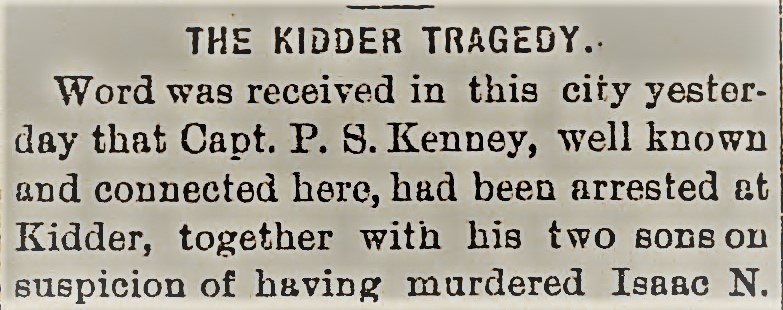
Patrick S. Kenney, builder of the infamous Kidder Mansion, was a well-respected early Caldwell County pioneer. Given his rise in prominence, his fall was even more unexpected and shocking.
The Rise of P. S. Kenney
Kenney, an Irish emigre, began his career as a merchant, successfully running one of the first stores in Kidder. Kenney boasted that his store brought in $30,000 per year in good times (about $900,000 in today’s market).
Kenney was drafted into the Civil War in 1863 and served as a quartermaster in the Missouri State Union Militia. He was thought to have accumulated considerable funds during that time. In 1870 he turned his attention to farming:
“Mr. P. S. Kenney, another merchant, is turning his attention to cattle raising. He has a small farm, nineteen hundred acres of which he is seeding down for the benefit of his stock this fall. Land in Kidder and Hamilton, is much cheaper that it is further northwest. Unimproved land can be bought for eight dollars per acre, and improved lands have been offered for twenty and twenty-five dollars per acre.”
The Daily Journal of Commerce 1870-06-11
It is during this period that he constructed his magnificent mansion. In 1873, Kenney’s ability and worth were recognized by the people of Caldwell County and he was elected to the office of County Judge. He was reelected several times, eventually filling the position of presiding officer.
It was not all good times for Kenney though. A series of unfortunate events made inroads into his fortune. A Hannibal and St. Joseph railroad engine caused a fire of his haystacks and fences; and he reportedly suffered a fire of his storehouses in 1874, cause unknown. The 1870’s also suffered a series of drought years followed by grasshopper plagues.
The horrendous invasion of locusts – when grasshoppers become a swarm they are called locusts – into western Missouri in 1874 and again in 1875 was on such a massive scale that they stripped every leaf from every tree, consumed all the fruit and vegetables in their path, ate all the grass, plants and crops, created havoc and left starvation in their wake.
Paul Johns
Perhaps thinking all form of plagues had ended, in 1879 Kenney decided to expand his operations.

In July, Kenney took out two loans against his land for $10,000 each. The same month, he was reported to have a flock of 4000 sheep.
The next month, Kenney secured an additional loan from the Daviess County Savings Association in Gallatin for $36,000. These funds were also secured by his land.
All told, Kenney leveraged his property for a total of $56,000 in the span of a month.
The Fall of P. S. Kenney
Unfortunately, the horrific droughts continued and a “memorable heat record” began in 1881 where crops were blighted and reduced to one-half their usual bounty, wells dried up, and stock water was scarce.
Kenney succumbed to the many pressures, defaulted on his loans, and his 1200 acre estate, including the “Mansion,” were sold at the courthouse steps in the summer of 1884.

After foreclosure, the buyer’s representative installed Isaac Hemry to stay at the Mansion with his family and guard the property.
Isaac Hemry was a Union Captain during the Civil War. He had earned a reputation for being particularly heavy-handed and cruel to Confederate sympathizers, which were numerous in the area.
The Kenneys, however did not go gently, nor initially, did they go at all. Soon after Isaac Hemry moved in, a party of Kenneys showed up and promptly, violently uninstalled Hemry. The party included at least two of P. S. Kenney’s brothers and his wife, Elizabeth. Mrs. Kenney purportedly threatened harm on any future soul who dared live in her dispossessed home.
P. S. himself denied having been there, and claimed no knowledge of the fight. The sheriff was again necessary to restore the property back to the owner’s representative and allow Isaac Hemry back into the home.
Murder at the Mansion
So things remained until Sunday morning, August 30, 1885.
At about 6 a.m. Isaac Hemry rode his horse to the west pasture just 3/4 mile from the mansion to salt some cattle. Soon thereafter, his wife and son heard two gunshots. His son, the 16 year old Ulysses S Grant Hemry, raced to the place he knew his father to be. By the time he got to his father, Isaac was only a few breaths from death and managed only to gesture weakly towards the tree line when asked who had done him in.
Ulysses Hemry then rode to Kidder to gather help, and within a few hours scores of men were at the scene and there was great excitement.
An investigation ensued. By the time it was concluded, Isaac’s son, two of the Kenney brothers, and Patrick Kenney himself had been either interrogated or charged with the murder of Captain Hemry. It was also theorized that “Confederate Avengers” perpetuated the crime.
Unfortunately, the only evidence was testimony from Ulysses wherein he stated the assassin was closely masked and a stout heavy built man that he did not recognize. The accused Hemry and Kenneys were quickly ruled out and all charges eventually dismissed.
The case remains unsolved today.
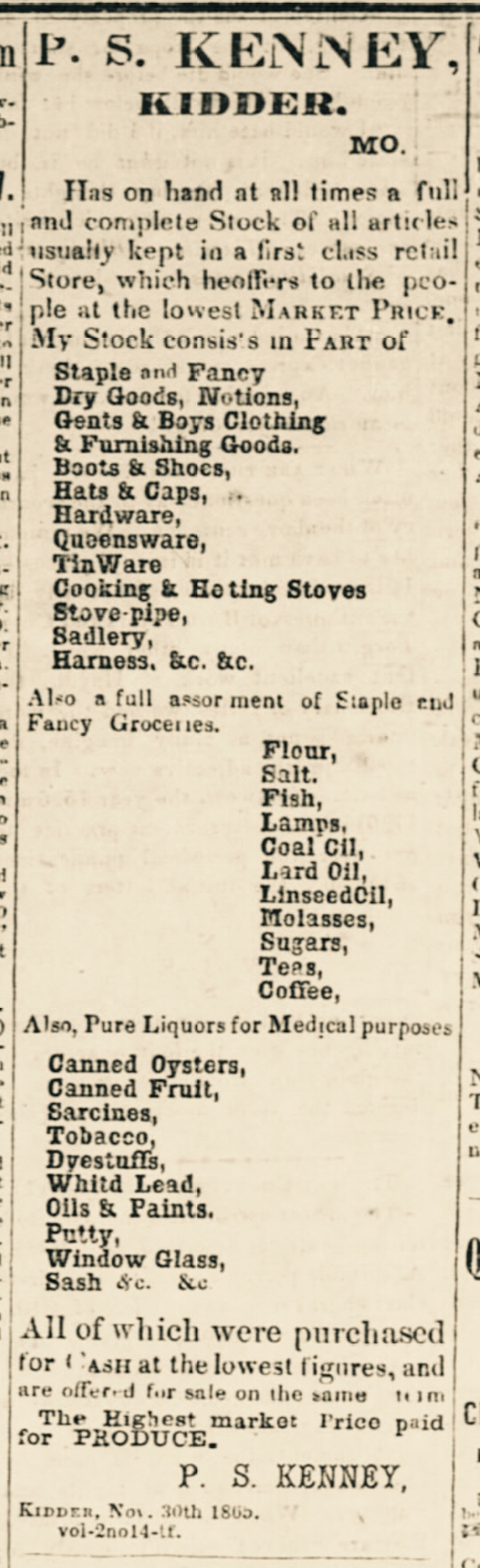
The North Missourian 1867-07-18 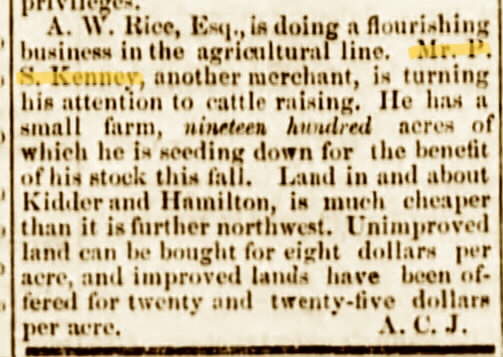
The Daily Journal of Commerce 1870-06-11 
P.S. Kenney Judgement against RR for fire 1875-03-31 Shelby County Herald 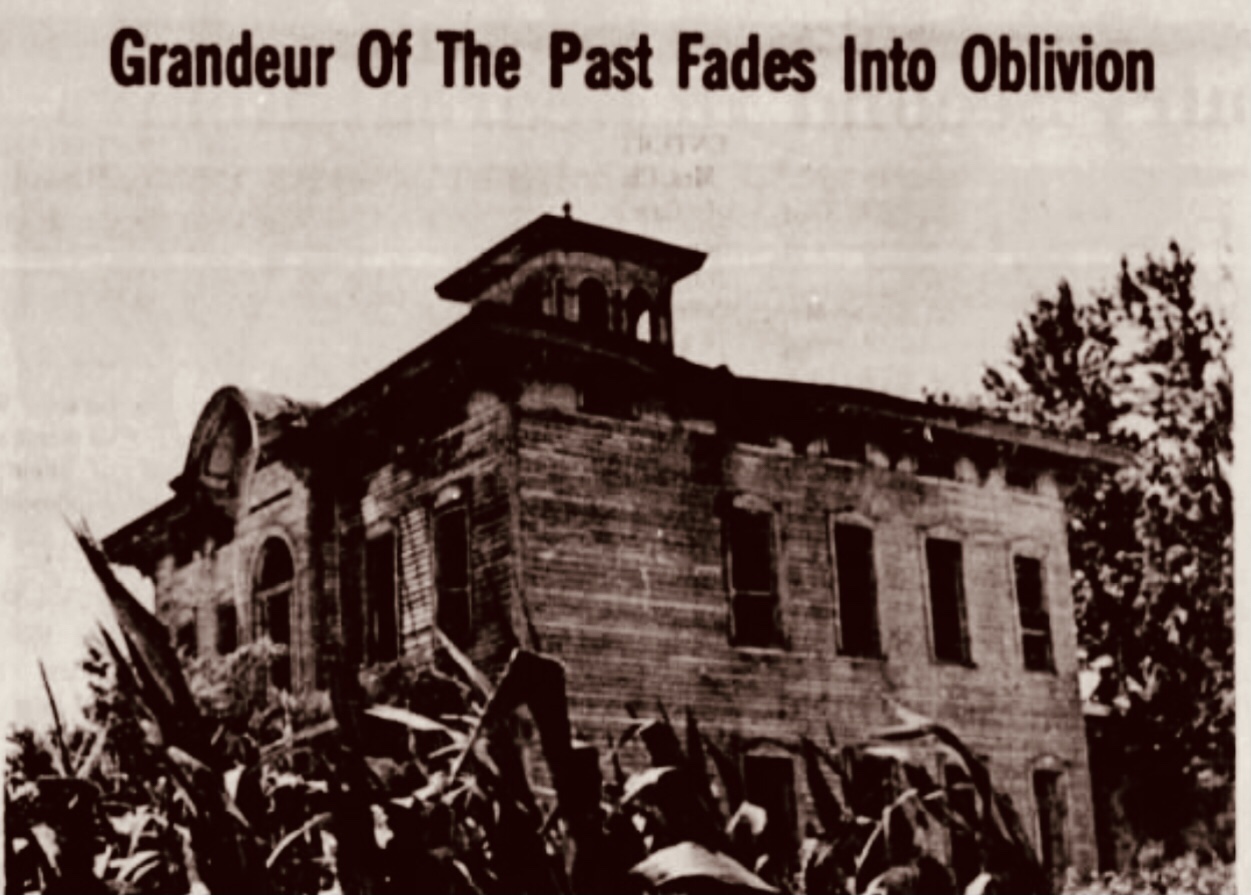
The Cameron Sun 1974-10-03
 Dirt Road History