Triple murder at Tri-County Road and NW Last Drive, just SE of Cameron, Mo results in only public hanging carried out in Caldwell County. The motive remains a mystery, but theories ranged from an illicit love triangle to the madness from a sore finger.
Dec. 21, 1907, just before daylight:
A blood-soaked Elsie Filley banged on the door and awoke her neighbor, J. W. Chafen. She had fled nearly a mile through the snow from her brother-in-law’s house. She was pregnant and carrying her 3 year old child.
Before she collapsed from a massive head wound, she relayed that her brother-in-law, Albert Filley, had beaten her, shot and killed her husband Clay Filley (his own brother), and beaten to death his wife, Fannie, and his own six-year old daughter, Dolly with a hammer.
Practice Run:
The prelude to this tragedy began the week prior, when it is suspected Albert Filley made a first, and unsuccessful attempt upon his wife’s life. Filley, suffering from a “felon” (finger abscess), claimed he had sent his wife to the barn to tend to the horses. After some time, he became concerned about her lengthy absence and claimed to have discovered her unconscious in the barn with a large wound across her forehead.
Mr. Filley ran to neighbor J. W. Chaffin’s and proclaimed “Come get Dollie (his 6 year old daughter), Fannie is dead.” Chaffin and Filley returned together to the Filley barn, where Chaffin later testified that the barn doors were latched. He found Fanny still lying in the stall occupied by three horses. The animals were quiet, and Chaffin was disturbed that Filley had walked three quarters of a mile to his house with news of her “death,” but had made no effort to remove her to the house or from the stall. He said that Filley offered no help in getting his wife into the house, and that it took some “persuasion” to induce Filley to call her a doctor. When medical help arrived, she received 15 stitches across her face, and regained a “semblance of consciousness.”
During the trial, Asa Ecton, who lived a quarter of a mile from the Filley house offered chilling testimony that corroborated events as reported by J. W. Chaffin. He said he had a clear view of the Filley barn, and on the day of her “accident” he saw Mr. and Mrs. Filley enter the barn together with two horses. He then saw Filley “strike something inside the barn with a stick” while standing in the barn doorway. Ecton said that while this was happening, he heard a woman’s voice say, “Oh, don’t!” and immediately thereafter watched as Filley walked out of the doorway, latched the barn doors, and turned toward the house. Half an hour later, he observed Filley walking in the direction of the J. W. Chaffin home.
Unfortunately, things were only going to get worse for Fannie.
The community five miles southeast of Cameron was horror stricken this morning when the word was passed along that Al Filley, a farmer of that neighborhood, had murdered his wife and little daughter and his brother, Clay Filley, and attempted to kill his brother’s wife who made her escape and told the terrible news to the neighbors. Clay Filley and wife had been staying at Al Filley’s home since the accident which befell Mrs. Al Filley a few days ago, at which time she was found lying senseless in the barn supposed to have been kicked in the head by a horse. They were assisting in the work on the farm, the injured woman’s condition still being such that she was unable to attend to her duties, and the husband yet suffering from a fellon [abscess] on his hand.
The story of the terrible crime may never be told, as the only witness aside from the murderer himself [sister-in-law Fannie], lies in a very critical condition as the result of wounds received from Filley, who no doubt thought he left her dead after the terrific struggle she had made for her life, as conditions at the house would indicate.
As near as we can learn the particulars are as follows:
Between three and four o’clock this morning, Clay Filley and wife, who were sleeping in an adjoining room, were awakened by a commotion in the bedroom occupied by Al Filley and family. They got up to investigate and as Clay was passing through a room to reach his brother’s bedroom, he was met by Al and was probably shot to death instantly as no marks other than the bullet wound were found on his body. The wife following him was next attacked by the murderer, and everything goes to indicate that his revolver must have been empty and that he beat her senseless with a hammer which was found covered with blood, and evidently left her for dead. The murder of his wife and daughter had already been accomplished and their bodies were found in the family bedroom, that of the wife lying in the center of the room with the skull crushed and the body of the child lying partly under the bed with marks of a blunt instrument on her forehead. Both bodies were in their sleeping garments, showing the murder had been committed probably while they slept.
Cameron Daily Observer, Dec. 21, 1907
Elsie Filley, the sole surviving witness, offered the following account:
Her husband was sitting up with the wounded wife of Albert Filley. At about 4:00 am, Albert suddenly entered the room and shot his brother to death without warning. Wounded, but still alive, the brothers struggled. “Round and round the room they fought, one brother seeking to get the revolver in a position to fire a second time, the other striving to wrest the weapon from him. Finally Albert Filley tore himself loose and ran outdoors.” Clay Filley then went to the kitchen and awakened his wife and told her he had been shot by his brother. Husband and wife then set about barricading the house at once to keep the murderous brother out. He soon returned, however, and smashed the door glass with a hammer. A vicious engagement ensued wherein husband and wife fought off their attacker, Mrs. Filley even dousing his face with carbolic acid. Unfortunately, Clay soon succumbed to the gunshot and sank, dying, to the floor. Albert then gained entry and beat Elsie Filley down with a stick of wood.
Elsie claimed that after she was beaten, she heard the “terrified cries and prayers for mercy” as Albert appeared at her door, blood-stained and disheveled, intent upon finishing the prior week’s failed deed. It will never be known whether he vented his rage first upon his wife, or upon his 6-year-old daughter, Dora, who slept with her mother. What is known is that under the bed was found the body of the little girl, her head crushed. The wife’s body was on the bed. She had been struck on the head again and again with the hammer.
Albert Filley Tells His Story:
Albert claimed the murder of his wife and child were actually perpetrated by his brother and sister-in-law while he was outside checking the security of his chicken coop. He stated that once he returned to the house, they attempted to murder him as well, so he was forced to shoot his brother with the gun he happened to have in his pocket, and thereafter struggle with his sister-in-law. He was unable to give any notion as to why they would want to attack him.
Trial and Conviction:
Doubt was sown into his account and Elsie’s claims were no doubt bolstered when the gun used to kill his brother was located the following day in a well at the Filley farm, and Albert was indeed suffering from carbolic acid burns.
During the trial the Defense asserted that Mr. Filley was suffering from insanity of a hereditary nature, however, he failed to offer evidence of such insanity, much less its heredity. The Jury was not persuaded, and on June 27, 1908, Albert Filley was found guilty of murder and sentenced to death by hanging.
It was posited by some that the sore finger may have pained him so much that he drank to gain relief. No proof of this was offered, however, and his bloodied fingerprints on a jug of whiskey in the house only proved that Filley had drank of its contents after his crime. The State also theorized at one point that they had evidence to show a “deep and well-planned plot with a motive centering on a possible attachment which Filley had for another woman in the neighborhood.” No evidence, either at trial, or in the years after the events, ever established such claims.
Hanged:
Filley himself never offered explanation. Before his execution, he simply stated, “If I did what they said I did, I hope I’ll burn forever.”
Albert Filley was hanged at the Kingston Jail on September 21, 1908. In spite of her family’s deep objections, he was buried in the McDaniel Cemetery just East of Cameron, next to the wife and child he had murdered.
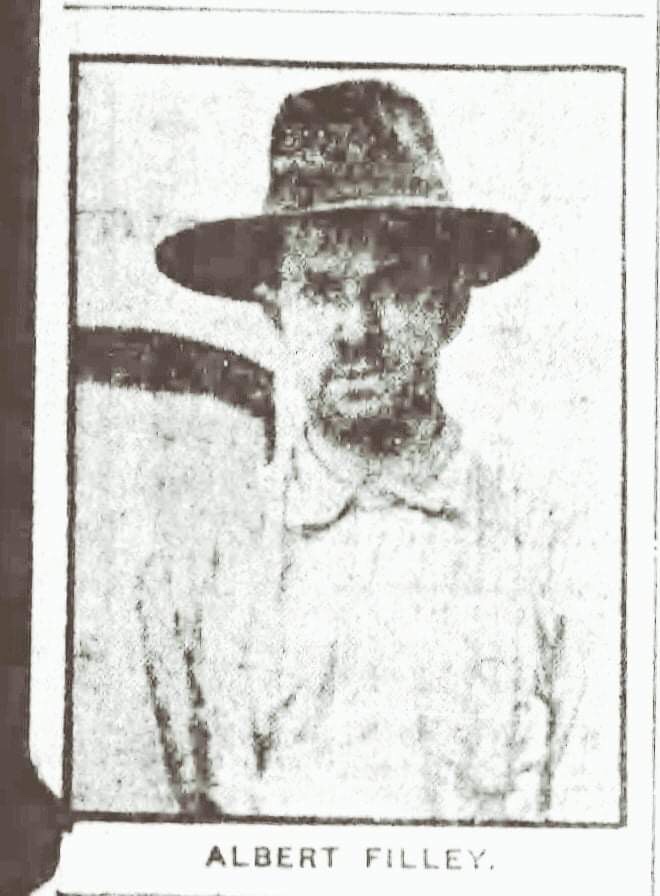
Albert Filley 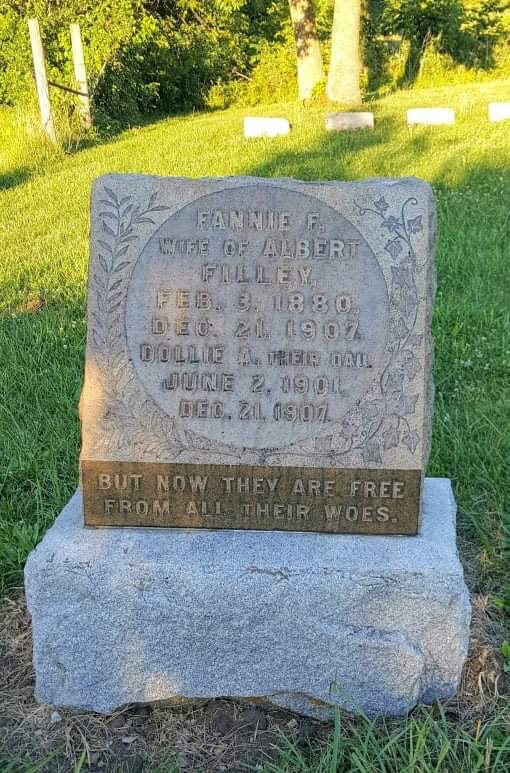
Headstone at McDaniel Cemetery 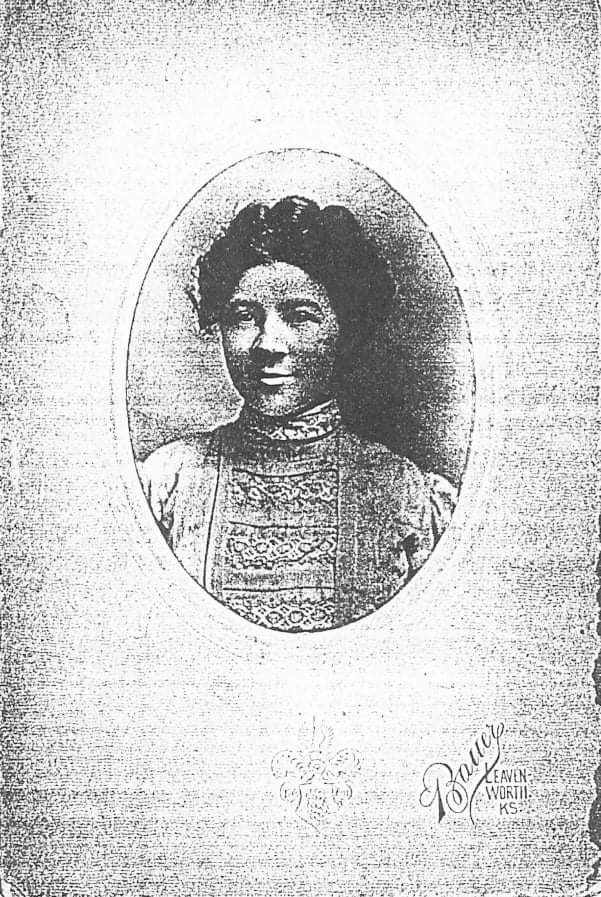
Surviving Witness Elsie Filley 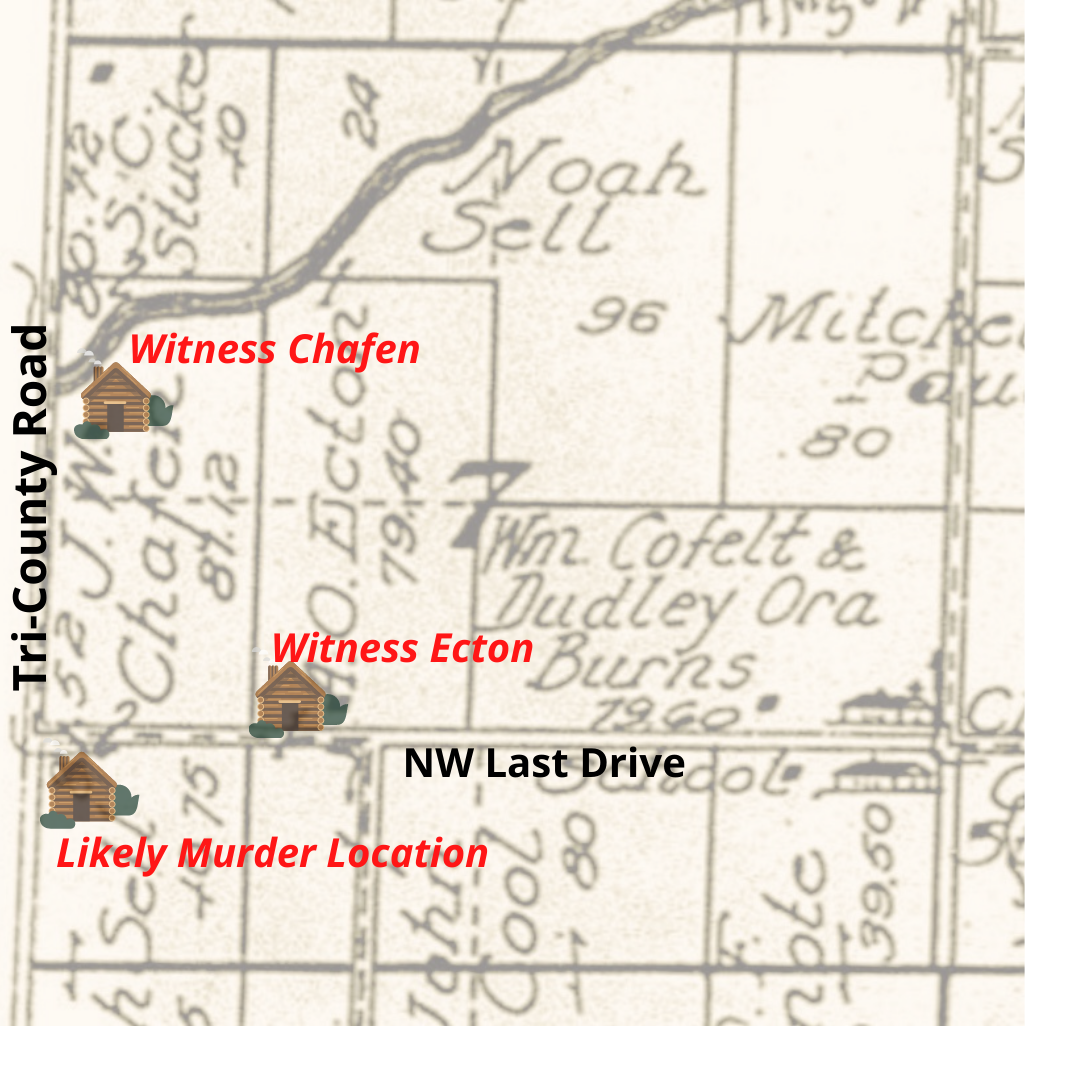
Historic Plat Map Locations
 Dirt Road History